Skipjack Nautical Wares Banner

Showing posts with label Skipjack Nautical Wares and marine Gallery. Show all posts

Sunday, September 28, 2014

Fort McHenry- A 200 Year Star Spangled Banner Celebration- Baltimore, Maryland- Peter Rindlisbacher

By Peter Rindlisbacher

Often, my art efforts have a direct link to my historical re-enacting.  A recent case in point was in Baltimore, participating in the Star Spangled Banner celebrations.  I towed my 27-foot longboat up from Texas, met with a Canadian crew, and some Maryland-based Royal Marines, and joined in the 1814 festivities.

Driving to Baltimore, Md. from Texas with longboat in tow.
The Maryland Yacht Club hosted us for the week, and we obliged by performing a wartime British boat landing at the Club.  We exchanged cannon shots, then I had fun with the crowd attending as an arrogant British naval officer, “… in time, you impulsive colonials will learn humility and your proper place in the world…”, and afterwards enjoyed a buffet dinner and chat with all combatants under a temporary truce.  The MYC gave me a gift club burgee pennant, and I surrendered my masthead Union Jack as a trophy of the affair.

Re-enacting the landing of a British longboat in Baltimore,Md. during
the Star Spangled banner celebration.
On Saturday, we went aboard a visiting Canadian Navy frigate in Baltimore Harbor for a cocktail reception – appropriate because the British campaign of harassment on the Chesapeake was largely to take the pressure off British troops on the Canadian border.  The company and food were excellent. We later witnessed the tremendous fireworks show, then returned again on the Sunday morning to see the large 1814 flag raised over Fort McHenry– which we answered with our own Star Spangled flag and gun salutes.

“Artist in his 1814 British Navy uniform, addressing the reception
attendees aboard H.M.C.S. ATHABASCAN.”

The tie-in with my art is that I had learned in my research that longboats like mine had been sent in close to the Fort on that fateful night, to launch a diversionary cannon and rocket attack on the American batteries.  I painted a six-foot oil on canvas of that scene, from the point of view of the British boats milling about in the dark, as the Fort was pounded by the British ships.  It was a tense moment in American history because Washington had fallen, and the defenders under heavy bombardment also expected a land attack at any moment.

"Perilous Night." A painting by marine artist Peter Rindlisbacher.
Skipjack Nautical Wares & Marine Gallery was able to supply me with framed giclee prints of the painting to give as gifts to the yacht club and Canadian warship. All in all, it was a truly satisfying trip, and suitable wrap up to the 200th Anniversary commemorations.

ABOUT THE PAINTING


Oil on canvas measuring 48 X 72 inches, unframed

The painting portrays the scene in the Ferry Branch of the Patapsco River off Fort McHenry about 1:;30 AM, September 14th, 1814. Nine armed barges full of picked men from the Royal Navy were discovered in the midst of their diversion attack, while Fort McHenry was being shelled with bombs and rockets from a line of British warships. The crossfire from the three U.S. forts and land batteries, and lack of progress in the British land attack, made the boats to withdraw out of range after a few hours of exchanging fire. Fort McHenry survived the night, of course, and a view of the flag still there by morning inspired the National Anthem. 

Previous portrayals of the 1814 bombardment of Baltimore have shown a view from the far distant line of British ships firing at Fort McHenry, or from the defenders` ramparts taking the punishment, or via a bird`s eye view of the Fort and distant enemy. 

Instead, the artist opted for what one historian has called "the first from this view", a little known element of the Battle, that a flotilla of armed British boats had been sent in close to the Fort as a diversion for the main land attack. Rindlisbacher's depiction is in among those boats, which likely had the best view of the Fort and battle that night. 

The boat assault coincided with one of the most dramatic and dangerous times in the Nation`s history. The Treasury was virtually bankrupt, weeks before Washington had been captured easily, the Whitehouse had been burnt, the First Family barely escaping, and Baltimore was expected to fall next. 

Portraying the high drama of that night was the artist’s objective in this painting, and its terror and violence cannot be overstated. Bombs, rockets and cannon balls relentlessly rained down on the Fort from the attacking ships and boats, while the Town waited in fear -- hours all in the midst of intermittent rain, thunder and lightning. 

A pivotal night in America`s history, before dawn broke, the British left and "the Flag was still there".

Sunday, September 7, 2014

War of 1812- Perilous Night; Naval Attack on Fort McHenry- September 14, 1814

Perilous Night; Naval Attack on Fort McHenry- Original Painting by Peter Rindlisbacher


Oil on canvas measuring 48 X 72 inches, unframed.

This just completed painting by marine artist Peter Rindlisbacher portrays the scene in the Ferry Branch of the Patapsco River off Fort McHenry about 1:;30 AM, September 14th, 1814. Nine armed barges full of picked men from the Royal Navy were discovered in the midst of their diversion attack, while Fort McHenry was being shelled with bombs and rockets from a line of British warships. The crossfire from the three U.S. forts and land batteries, and lack of progress in the British land attack, made the boats to withdraw out of range after a few hours of exchanging fire. Fort McHenry survived the night, of course, and a view of the flag still there by morning inspired the National Anthem.

Previous portrayals of the 1814 bombardment of Baltimore have shown a view from the far distant line of British ships firing at Fort McHenry, or from the defenders` ramparts taking the punishment, or via a bird`s eye view of the Fort and distant enemy.

Instead, the artist opted for what one historian has called "the first from this view", a little known element of the Battle, that a flotilla of armed British boats had been sent in close to the Fort as a diversion for the main land attack. Rindlisbacher's depiction is in among those boats, which likely had the best view of the Fort and battle that night.

The boat assault coincided with one of the most dramatic and dangerous times in the Nation`s history. The Treasury was virtually bankrupt, weeks before Washington had been captured easily, the Whitehouse had been burnt, the First Family barely escaping, and Baltimore was expected to fall next.

Portraying the high drama of that night was the artist’s objective in this painting, and its terror and violence cannot be overstated. Bombs, rockets and cannon balls relentlessly rained down on the Fort from the attacking ships and boats, while the Town waited in fear -- hours all in the midst of intermittent rain, thunder and lightning.

A pivotal night in America`s history, before dawn broke, the British left and "the Flag was still there.”

The painting is now available for purchase and be seen at Skipjack Nautical Wares & Marine Gallery, One High Street, Portsmouth, Virginia.

Giclee prints on stretched canvas are now available in two sizes: 24 inches X 36 inches and 40 inches X 60 inches. Here's the link to the artist's page at Skipjack Nautical Wares & Marine Gallery.

Also available- War of 1812: The Marine Art of Peter Rindlisbacher (Hardcover)
By Peter Rindlisbacher (Author) Victor Suthren (Introduction)
War of 1812: The Marine Art of Peter Rindlisbacher 


Released May 2013. War of 1812 : The Marine Art of Peter Rindlisbacher showcases 120 paintings in color by Peter Rindlisbacher, CSMA, of the maritime events during this epic time. His artwork documents many of the ships which were involved in the Great Lakes arena along with sailors and militia. This 190 page book is a record of his superb work with an introduction by Donald E. Graves and forward by Victor Suthren. Published by Quarry Press, Kingston; ISBN 978-155082-364-6.

*Museums and historic sites in the U.S. and Canada have purchased many of his paintings and his artwork is represented in part here at Skipjack Nautical Wares & Marine Gallery.

Monday, March 4, 2013

Skipjack Nautical Wares & Marine Gallery Celebrates 10 years in Hampton Roads and Beyond

Skupjack Nautical Wares & Marine Gallery riverfront showroom
is located in Olde towne Portsmouth, VA.

By Toi wilson
Portsmouth Virginia Department of Economic Development


Portsmouth is a seaport town where maritime history and traditions created a way of life.  Today, homeowners and boaters look to recreate the days of nautical living through home décor, art, and apparel. Customers throughout Hampton Roads, and as far away as New Zealand, have discovered authentic nautical antiques and furnishings, original marine art, and handcrafted nautical accessories at Skipjack Nautical Wares and Marine Gallery here in Olde Towne Portsmouth.

Skipjack's Chelsea Room features authentic nautical antiques and marine art.

Custom made grate table.
Skipjack Nautical Wares, celebrating 10 years in business this month, is located at One High Street in historic Downtown Portsmouth.  A decade ago, owners Alison and Joe Elder set sail on a journey to merge their passions for boating and uncovering history with their business management experience to create a specialty store that offers a range of nautical-themed merchandise.  The furniture and home décor is constructed using recycled or re-purposed materials, also known as Eco Furniture.


Nautical Chart Lampshade.

The Skipjack design studio utilizes many shipboard items that are removed from retired ships in foreign and domestic shipyards as well as natural materials, such as locally found driftwood, in addition to boards and vintage fishermen's materials to produce one-of-a-kind coastal living pieces. Artwork and handmade gifts are mostly the work of local craftsmen, such as the Salt Water Bath Co. soaps made in Hampton, Virginia and the Monkey’s Fist Rope Knot furniture knobs (an interior decorator’s favorite) produced here in Olde Towne.  The nautical lampshades are constructed in the Skipjack Design Center using only the highest quality materials, including authentic NOAA nautical charts featuring locations from the Chesapeake Bay region.


Over the past ten years, the Elders have grown their store from a local, specialty boutique into an international business.  They attribute their success to being resilient, flexible, and persistent.  Initially, Skipjack was located in an area that did not meet the needs of the business.  In 2005, the Elder’s changed course and moved to Portsmouth.  In 2008, a fire destroyed their store and their residence.  The business realigned and made headway to its current location on the Portsmouth waterfront.

Skipjack Nautical Wares High Street location,
 Olde Towne Portsmouth, VA.

A dedicated web presence (online store, blogs, social media, information sources) has supported the brick-and-mortar operation.  Joe advises that a constant web presence and marketing are essential components for running a retail business.  Allison’s advice for new entrepreneurs is to remember to have patience and be flexible to market trends.  It takes time to establish a customer base, and as markets change, businesses should be prepared to make adjustments to stay the course.

The next time you are in Portsmouth or surfing the web, be sure to visit Skipjack Nautical Wares and Marine Gallery where you can find a tribute to our seaport City’s origins and a collection of the best in coastal living.

Toi Wilson is a respresentative for the City of Portsmouth,Virginia Department of Economic Development. She writes monthly articles featuring Portsmouth's people, places and things as part of the departments Enewsletter.


Thursday, December 13, 2012

F. Persky & Company- The Beginning of the Perko Story

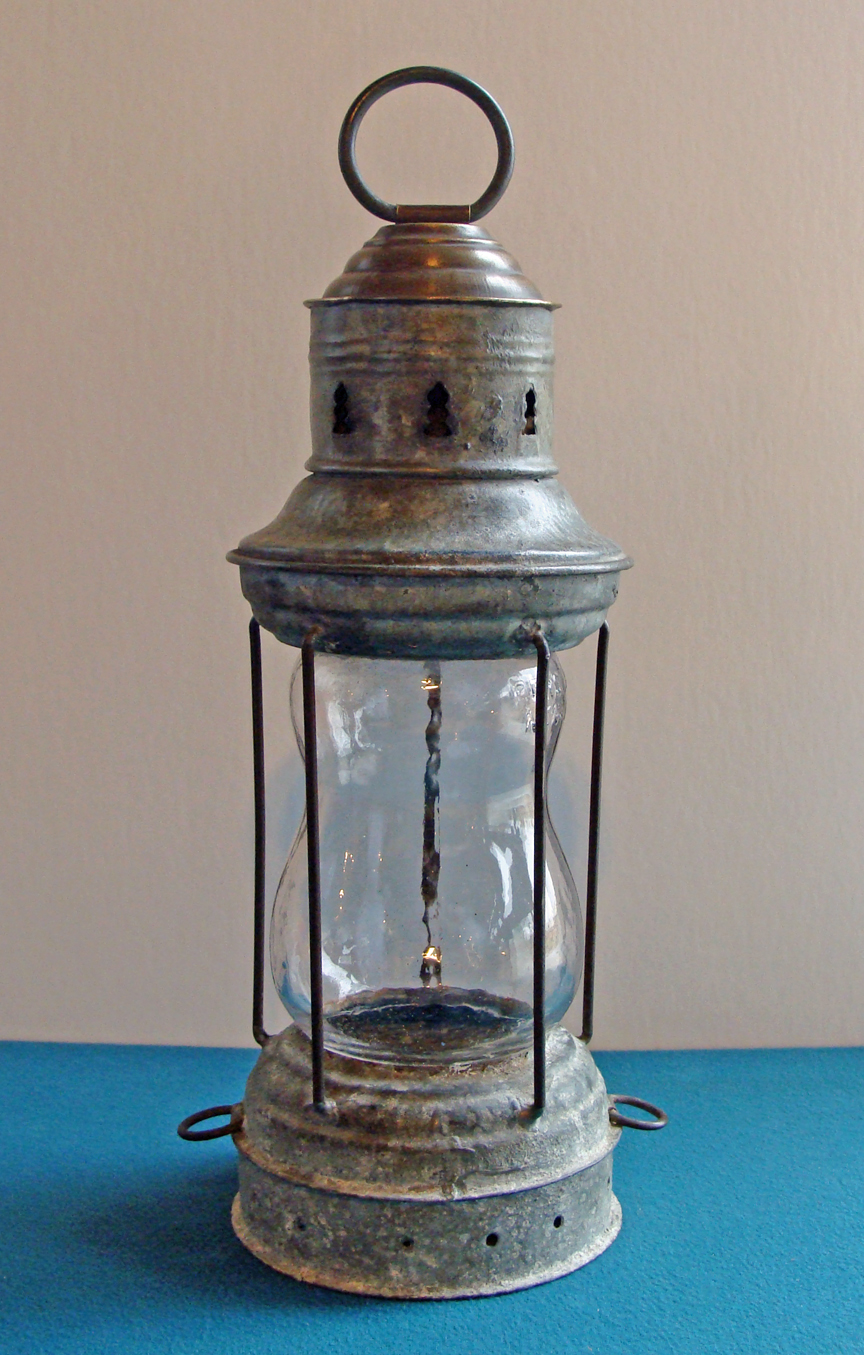
Full view of the Persky & Co anchor lantern. Today the company is known as PERKO.

The PERKO Story consists of many interesting pieces. They make up a modern day marine hardware success story that goes back over 100 years! This is the first sentence from the Perko story, the history of the famous American marine lighting company as taken from their website. I had known enough about the Perko story to turn to it while researching this recently discoverd lantern and the article was the source that validated it's maker. So, this blog is in part about the Perko companies beginnings and is demonstrated by an example of one of the first marine lanterns produced by this famous marine hardware company.

Name of PERSKY & CO., AJAX , NEW YORK, U.S.A. on hourglass shaped globe.

This early example is of one of their first anchor lanterns produced when the company was created by F. Persky & Company, New York, lantern makers in the early 1900's. The company was in operation for about a dozen years until 1913 when Frederick became president of National Marine Lamp Company. This Company name was established prior to Frederick Persky changing his last name to Perkins! (See history below).

Side-open view of the Persky lantern.

This unique lantern was manufactured using galvanized metal with brass chimney cap and 'Christmas tree' vents and ring handle and two tie-down rings on each side and five vertical wire guards. Fixed 'hourglass' shaped molded colorless globe with embossed letters stating "PERSKY & CO. AJAX. NEW YORK, U.S.A.". According to a PERKO representative, they believe that the name 'AJAX' was the name of the company that produced the glass globe. Measures 10 3/4" tall, exclusive of the ring bail handle, 4 1/4 inches diameter of base. Slight scaling on exterior of the metal surface, but overall, this lantern survives in good original condition. Missing burner.

Top section and brass chimney cap of Persky & Co. anchor lantern.

History (The Perko Story)

The story starts with Frederick Persky, who later became known as Frederick Perkins. He was a Russian immigrant who was schooled in Germany as a machinist and tool-and-die maker. Frederick came to the United States in the early 1890's and soon became employed as a machinist for E.W. Bliss & Company in Brooklyn, New York. In the early 1900's, he and a partner began operating a business, F. Persky & Company, Lantern Manufacturer, out of the basement of his house.

In 1907, Frederick's son Louis joined him in the business, and together they enlarged both the product line and the manufacturing facilities. By 1912, they had seventeen employees and made a wide range of marine lanterns and products.


The business continued operating until 1913 when Frederick became president of National Marine Lamp Company, based out of Forestville, Connecticut. Frederick and Louis left that company in 1916 and moved back to Brooklyn, New York, where they started Perkins Marine Lamp Corporation.

Anchor lantern manufactured by the National Marine Lamp Co., Forestville, Ct.

Five generations later, PERKO is still a privately owned, family operated corporation, which is unusual in today's marketplace. Perkins Marine Corporation was initially known as Perkins Marine Lamp, Inc. The original focus was on the manufacture of hand formed sheet metal products for the marine market. The first catalog was published in 1916, with a product line as diverse for its time as PERKO's catalog is today.

Anchor lantern manufactured by Perkins Marine Lamp Co.,  Brooklyn, New York

It included a full range of kerosene and electric lanterns for small and large boats, ventilators, chart cases, signaling devices, mooring buoys, pumps and a variety of spare parts. These products, fabricated from brass, copper and galvanized sheet metal, began what was our ongoing reputation for producing high quality products. We still do some hand forming and soldering today, much as it was done in our early years.
In 1922, the "PERKO" trademark was instituted. Each new product (and there were many) utilized the latest, sophisticated metal manufacturing technology and customers came to expect the highest standard of excellence from PERKO products.

Two other examples, one identical to the one in this blog, the other manufactured in brass was in the Phillip Sullivan Collection of Lanterns, recently auctioned off by the Jeffry S. Evan & Associates, Mt. Crawford, Virginia.

The Persky & Co. AJAX anchor lantern is currently available at Skipjack Nautical Wares & Marine Gallery. Follow the link above to the product listing on their webstore.


Monday, December 3, 2012

Spectacular Battleship Size 48-Star American Flag

Massive 48 star US ensign laid out in front of Skipjack Nautical Wares.
It's a wonder what one might find digging around at local antiques and flea markets. And that is what we encountered this last Saturday at the Olde Towne Antiques to Flea Market here in Portsmouth, Virginia. Held the first Saturday of each month, the Olde Towne Portsmouth event is always full of interesting items, from the typical yard sale flea type finds to the most unexpected treasures. Last year, I discovered and purchased a Philadelphia windsor bowback side chair, branded with the name of the maker, John Letchworth (1759-1843). His shop was located on Third Street between Chestnut and Walnut (1784) and he actually made chairs for Thomas Jefferson and used at Monticello. More on this in a later blog.

A view above the flag. Magnificent!
This time we discovered an extremely large pile of wool bunting stuck in the corner of the vendors booth that appeared to be the colors and design of an American flag. Upon closer inspection, we knew it was more than that, it was a major find. I asked the owner what he knew about it. He responded by saying that they had just purchased it and it came out of a house accross the river in Norfolk, VA. The flag had been stored away for longer than the previous owner could remember, but recounted that it once was flown above a battleship during WWII. Unfortuately, he did not know the battleships name. This is not unusual. Other accounts of battleships decommissioned and deaccessed flags were sometimes removed in order to maintain secrecy.

I continued and asked him how large was the flag and the condition....obviously way to big to unfold and inspect in it's current location. He responded, "Well, it's about 20 feet by 30 feet or thereabouts and is definitely worn. To big for anyone to hang on their walls".
After not much consideration, Alison paid them for it and I hauled it out to our car. Damn heavy; that's a lot of flag to carry and a lot of history too!

Alison measures the  height of the flag.
Later that day, with the help of a few of our friends, we unmatted the pile of flag and stretch her out in front of our store. We reviewed the condition of our find- yes, definitely some rips and tears, typical of the damage inflicted on a ships flag due to weather and/or battle conditions. We found the flag makers tag sewn on to the heavy canvas heading. The tag stated:  "HIGH GRADE, REG. U.S. PAT. OFF., BUNTING, -ALL WOOL-, THE BEST SINCE 1847'. This was the label used on U.S. government and military flags made by Annin & Company, New York, a major producer of high quality flags and the maker of this one as well. The massive 48-Star US national ensign flag, measured  20' x 38' in size and according to the presidents standardized sizing for flags created in 1912, this is flag size #1, the largest of US ensigns produced. Annin & Co. named this size flag "ABRUS".

The sewn on tag by Annin & Co., New York.


Folding up the flag for safe storage.


A 1926 advertisement fot Annin & Co., New York.


USS Iowa commissioning ceremony. The flag is similar to the one in this blog.
This flag was a great discovery and I would rank it up there with some of our greatest we've uncovered to date. Not so much as a valuable item, monetarily wise, but such a major symbol of our nation, potentially flown during major naval battles and rising above all others as the symbol of freedom that so many have laid down their lives defending it. Semper Fi!

Here is the link on Skipjack Nautical Wares & Marine Galleries page on our webstore. We will also consider donating it to the right foundation or museum if the right opportunity arrives.  We have also included here a link to the Zaricor flag collection, a national treasure presentation of American ensigns, jacks, flags  & pennants.


Friday, November 16, 2012

Maritime Lantern- Manufactured by Barbier, Benard and Turenne, Makers of Lighthouse Fresnel Lens

Post or Anchor lantern made by Barbier, Benard & Turenne, Paris France.
A recent discovery by our firm, this exceptional post or anchor lantern was produced by the French manufacturer Barbier, Benard & Turenne, Paris France. What makes this lantern so exceptional is that Barbier, Benars & Turenne, also known as BBT was a major manufacturer of the Fresnel lens that light up numerous of the lighthouses found along our countries coastlines. Notice the lighthouse styling of this exceptional maritime light- reminiscent of the

LANTERN DESCRIPTION
Manufacturers nameplate for
Barbier, Benard & Turenne. 
This fine brass lantern stands 14 1/2 inches tall and features a thick, 360 degree glass Fresnel type lens that survives without cracks or chips, protected by 6 heavy gauge cast brass guards. The upper body of the lantern is designed with a ball style chimney with a series of cylindrical vents on the bottom edge. The lower body measures 4 1/4 inches tall from the bottom to the upper lip and would house the lantern burner. The manufacturers plate is positioned on the front side and states in embossed letters "ANCIENS ETACLISSEMENTS, BARBIER, BENARD & TURENNI- USINES (82, AUC CURIAL, PARIS-19; BLANC-MISSERON) (NORD)


Translated- OLD INSTITUTIONS, BARBIER, BENARD & TURENNI FACTORY (82, AUC CURIAL, PARIS-19; Blanc-Misseron) (NORTH) which is the manufacturers name and Paris address of production. The number 82116 is also engraved below and a series of cylindrical air vents in between.  The diameter of the lamp measures 5 1/2 inches. For more information on this lantern, follow the link here to the listing on Skipjack Nautical Wares & Marine Gallery.

Post or Anchor lantern made by Barbier, Benard & Turenne, Paris France,
 Skipjack Nautical Wares & Marine Gallery

MANUFACTURER HISTORY
The Company Barbier, Benard and Turenne, abbreviated BBT is a company founded in 1862 , specialized in the manufacture of headlights, the optical devices and lighting systems. Leader in the field of global flagship in the late 19th century, the company has diversified in the twentieth century, but was dissolved in 1982.

Fresnel lens produced by Barbier, Benard & Turenne
for the Sabine Bank Lighthouse,  Sabine River, Texas.
The company was founded in 1862 by Frédéric Barbier and Stanislas Fenestre under the name "Barber and Fenestre." She then called "Barber and Co." in 1887 and "Barbier and Benard" from 1889, and is in the early twentieth century to its final name "Barbier, Benard and Turenne." It became a public limited company in 1919. Production "Barbier, Benard and Turenne" or "BBT" began to specialize in the production of optical systems for lights , according to the system of Fresnel lense. The company then expanded its production, from farther away in the equipment headlights. In addition to its lens, it extends its first production at various rotation mechanisms, including weight and rotating tank on mercury . Then, it produces more buoys, steel towers, mermaids mist.  BBT thus comes to be able to construct the lighthouses in their entirety, including the tower, optical instruments and all necessary equipment. It becomes "known throughout the world". It is a world leader in the construction of lighthouses in the late 19th century. In 1923, the company developed the "gas BBT" which bears his name. This gas provides improvements in compression quality gas lighting and security.


LOCATIONS
The workshops are primarily located in Paris, close to the Ourcq canal. BBT then retains its headquarters in Paris, factories being located in Nazelles (Indre-et-Loire) and White-Misseron (North).


Sabine River Lighthouse, Texas

Top section of the Sabine River lighthouse tower and lantern room 
The Sabine River Lighthouse is one that houses a Fresnel lens produced by Barbier, Benard & Turenne.  Follow the link here for more information about the  Sabine River Lighthouse.

Sunday, October 7, 2012

Schooners of all types and sizes will be docked along Portsmouth's riverside Saturday,
October 13, 2012 as part of the 23rd Annual Great Chesapeake Bay Schooner Race. Photo by Joe Elder
They're schooners here, there and just about everywhere along our riverside and you won’t want to miss it. That’s right, this Saturday, October 13, 2012, the City of Portsmouth, Virginia hosts the 23rd Annual Great Chesapeake Bay Schooner Race post race celebration. The world’s largest gathering of schooners will race again from Annapolis, Maryland to Portsmouth, Virginia, with nearly 40 entries in this year's race. They'll be schooners of all types and sizes docked along Portsmouth’s waterfront for you to view, with some open to the public.

The 23rd Annual Great Chesapeake Bay Schooner Race from Annapolis, MD
to Portsmouth, VA. Photo by Joe Elder

 We also invite you to stop by (we'll, we're only a few steps away) and see all of the great new inventory here at Skipjack including ships wheels, new, vintage and antique lamps, lanterns and maritime lighting, WWII era U.S. Navy instruments, and all types maritime antiques. We've also received a large assortment of great nautical decor items including fish nets, netted colored glass jugs and float balls, brass cleats, bell ropes and sailor marlinspike knives from Myerchin. And, our classic Skipjack long sleeve shirts, crewneck and pullover hooded sweatshirts are available in all sizes and new colors too! You can check out some an assortment of our new arrivals by following the link here to Skipjack's NEW! JUST IN! section on our webstore.


Stefan Edick Skippers the "Schooner Virginia"
in appropriate yachting attire!  Photo by Joe Elder.

For more information, follow the link here to the 23rdAnnual GCBSR Official Race Program and here’s the link to the Great ChesapeakeBay Schooner Race website. Hope to see you here!

Wednesday, August 29, 2012

Wildlife Carvings from California Artist Greg Pezzoni at Skipjack

Carved and painted yellowfin tuna by Greg Pezzoni.

Raised in Santa Barbara, on California's southern coastline until his early teens. Greg was exposed early to both fresh and salt water angling. Half day boats in the Santa Barbara channel and full day excursions to the city's famous wharf introduced him to numerous species, such as bonita, halibut, sheep head, sharks, rock fish and kelp dwellers of all kinds. A small lake within walking distance instilled his passion for largemouth bass fishing, while supplying mixed bags of bluegill, crappie and catfish. With back packing trips to the nearby Santa Ynez and Sierra Nevada mountain ranges, Greg then added California's numerous trout species (including the coveted golden trout, California's state fish) to his fishing "have caught" list. Relocating to Kentucky, then North Carolina, enabled him to fish waters he had only read about. Carolina's famous outer banks, the Dan and New rivers of Virginia, and the TVA impoundments of the Smokey Mountains added striped & small mouth bass, bluefish, Spanish & king mackerel to the list. Having excelled in art since an early age, he has combined that gift with his love of the outdoors and angling, to create these highly realistic wooden relief carvings. Greg now resides just outside of the small town of Linden, Ca. on the Calavaras River, where he lives with the catch of his lifetime.


You can visit a selection of Greg's marine-wildlife carvings on our website by following the link here to Greg Pezzoni. at Skipjack Nautical Wares & Marine Gallery. We currently have a great selection of his whales to choose from including humpback, sperm and gray whales. These life-like relief carvings will certainly be highly collected and a perfect accompaniment to your coastal home. Shown above: A large white sperm whale and below, a humpback whale.


Carved from kiln dried pine, the pectoral and pelvic fins  are carved separately and added on to give the impression of a full bodied mount. Each piece is then sealed, primered, painted and then finished with several coats of high quality varnish. Greg uses high quality species correct taxidermist glass eyes in most of my carvings. The back is flat with a custom designed mounting bracket that allows you to angle the mount in any direction with only one hanging point. It also extends the mount out away from the wall giving it a more rounded three dimensional look.There are felt pads that allow this feature with no damage or scratches to your wall.


Greg's wildlife carvings is a great example of the type of marine art that you will find at Skipjack Nautical Wares & Marine Gallery. Here is a link to the marine art gallery department at Skipjack.


Tuesday, July 10, 2012

U.S. Navy Binnacle & Engine Order Telegraph From the Liberty Ship "JOSEPH PULITZER"

U.S. Navy Binnacle & Engine Order Telegraph from the bridge of the Liberty Ship "JOSEPH PULITZER"
In 1973, the Liberty Ship SS "JOSEPH PULITZER" was under tow, transferred from the James River to a salvage yard near Cape Henry, Virginia.  A survivor of WWII, the "JOSEPH PULITZER" was one of 200 Liberty ships that on  June 6, 1944 took part in the D-Day landings. Today, only a few parts and pieces of the ship survive to tell the story. The ship's binnacle compass and engine order telegraph from the bridge were removed from the ship before salvage and are now on display at Skipjack Nautical Wares & Marine Gallery in Portsmouth, Virginia.

From the previous owner- "The telegraph and binnacle were a gift from the captain of the Polish salvage tug that towed the liberty ship "JOSEPH PULITZER" (the vessel from which they came) to the salvage yard in 1973. Her hull number was #0644, her keel was laid August 1942 and she was delivered in September 1942. She was active throughout the war in Europe and was laid up in the James River idle fleet after decommissioning at the end of WWII. I was the pilot that piloted the salvage tug towing the Joseph Pulitzer from the ghost fleet in the James River to Cape Henry, Virginia in 1973. Captain L.D. Amory III"

A typical Liberty ship crosses the ocean carrying cargo to a foreign destination. Photo from the Library of Congress.
As published in the book "THE LIBERTY SHIPS from A (A.B. Hammond) to Z (Zona Gale)" written by Capt. Walter W. Jaffee, the Liberty ships were the backbone of the Allied supply lines in World War II. Millions of tons of war material were needed on battlefronts around the world. The full might of U.S. industrial power was brought to bear and, “built by the mile and chopped off by the yard,” 2,710 Libertys sailed out of American shipyards to deliver the goods. From Murmansk to the great D-Day invasion; in the Atlantic and Pacific theaters of war; from Iwo Jima and the Leyte landings to the invasion of Okinawa, Libertys were the “bridge of ships” that helped the Allies win the war. Only two operational Liberty ships, the SS John W. Brown and the SS Jeremiah O'Brien, remain. 

Merchant Marine Heroes: Meritorious Service Medals Awarded "for Conduct or Service of a Meritorious Nature" during World War II

Bramble, Walter W. [H]  Able Seaman, SS Joseph Pulitzer 
In 1943, the SS Joseph Pulitzer, in which Bramble (then able seaman) was serving, transported troops, vehicles and Army supplies from a North African base to Gela, Sicily. This vessel, and others in the convoy, were subjected to many strafing and bombing attacks by enemy planes and also to bombardments from shore based artillery. During one of these attacks fragments from an anti-personnel bomb wounded all eight of the crew of the after three-inch gun, some so seriously that it was necessary to transfer them to a naval vessel for treatment. In this emergency, Bramble, who had some previous gunnery experience, volunteered and received permission to form a new gun crew composed of merchant seamen and Army personnel. For four days and nights this amateur crew performed valiant service in driving off enemy planes. It was credited with one plane shot down. Bramble's fine spirit, leadership and skill contributed materially to the safety of the ship and were in keeping with the high standards of the United States Mrchant Marine. [Bramble was from Baltimore, MD] Sep. 12, 1946.  http://www.usmm.org/msm.html

Also noted:
A couple of hours after the Robert Rowan sank, four German planes attacked with fragmentation bombs, one of which wounded eight men inthe Joseph Pulitzer's 3-inch gun crew. The Pulitzer had a former Navy gun pointer in her civilian crew, so Captain Kingdon S. Thomas made him gun captain of a merchant seaman gun crew which "did some fine shooting." The new gun crew was drenched by water that night when raiding dive-bombers gave them some near misses. The third mate merely ended the log for the 8-to-12 watch with, "Army stevedores discharging cargo between bombs, bullets and barges." Walter Bramble.

Follow the link U.S. Navy Binnacle & Engine Order Telegraph From the Liberty Ship "JOSEPH PULITZER" for a complete description and images of these exceptional surviving instruments.

Friday, June 15, 2012

Classic Nautical T-shirts by Skipjack

DESIGNED FOR FUN IN THE SUN

Skipjack's new "Don't Give Up the Ship" nautical T-shirt.
New from Skipjack in celebration of the Bicentennial of the War of 1812. Skipjack's new "Don't Give Up the Ship" T-shirt with graphic artwork on back designed after a Bellamy carved eagle and in celebration of the Bicentennial of the War of 1812 with the famous quote by Captain James Lawrence. The front is non-pocketed and features the Skipjack Nautical Wares logo. Available in three colors; patriot red, navy blue and driftwood grey. Men's sizes medium through 2XL. Skipjack's Nautical Apparel.

Tradition has it that Captain James Lawrence said these heroic words after being mortally wounded in the engagement between his ship, the U.S. frigate Chesapeake, and HMS Shannon on 1 June 1813. As the wounded Lawrence was carried below, he ordered "Tell the men to fire faster! Don't give up the ship!"


Although Chesapeake was forced to surrender, Captain Lawrence's words lived on as a rallying cry during the war. Oliver Hazard Perry honored his dead friend Lawrence when he had the motto sewn onto the private battle flag flown during the Battle of Lake Erie, 10 September 1813. 

 Skipjack's new "Don't Give Up the Ship" T-shirt  in patriotic red,  driftwood grey and  navy blue.


Skipjack's "UNDERWAY" classic nautical T-shirt.

By popular demand-  Skipjack has brought back its classic "Underway" nautical T-shirt in red, white and blue in celebration of the 200th Anniversary of the War of 1812. Available in100% cotton pre-shrunk garment-dyed T-shirt in sun-bleached red and Olde Towne blue and our standard T-shirt in white featuring the Skipjack "Underway" silkscreen design on the back and the Skipjack Nautical Wares logo on the front.

Great for fun in the sun. The racing Skipjack nautical  embroidered short sleeve T-shirt.
Featuring our original "Racing Skipjack" embroidered logo design on 100% super soft, breathable cotton except heather gray which is 90% cotton and 10% polyester.Comfort cuffs that hold their shape, built to minimize shrinkage. Skipjack Nautical Apparel.

Our embroidered "Racing Skipjack" nautical T-shirt.
Complete your great nautical look with Skipjack's top selling nautical code signal flag belt in red, white and blue. This cotton web ribbon belt for all seasons has full grain drum-dyed leather billet and buckle ends accentuated by the solid brass buckle. This belt is available with your choice of white, red or navy webbing as a background to the signal flag ribbon. MADE IN THE USA! Skipjack Nautical Apparel.

Nautical code signal flag belt and matching key fob.
Skipjack has also added a selection of nautical hats for fun in the sun- perfect for days on your boat or out on the town.  Our lightweight Boonie hat is a great choice for warm days out on the boat or just to shade your face and head. The microfiber material is rated at 50+ UPF protection. Trim: 3 1/2 inch brim, chin cord, antique brass grommets and mesh lining. Available in khaki, olive and navy in sizes medium, large and x-large. Skipjack Nautical Apparel.

Our lightweight Boonie hat is a great choice for warm days on the boat or out on the town.